





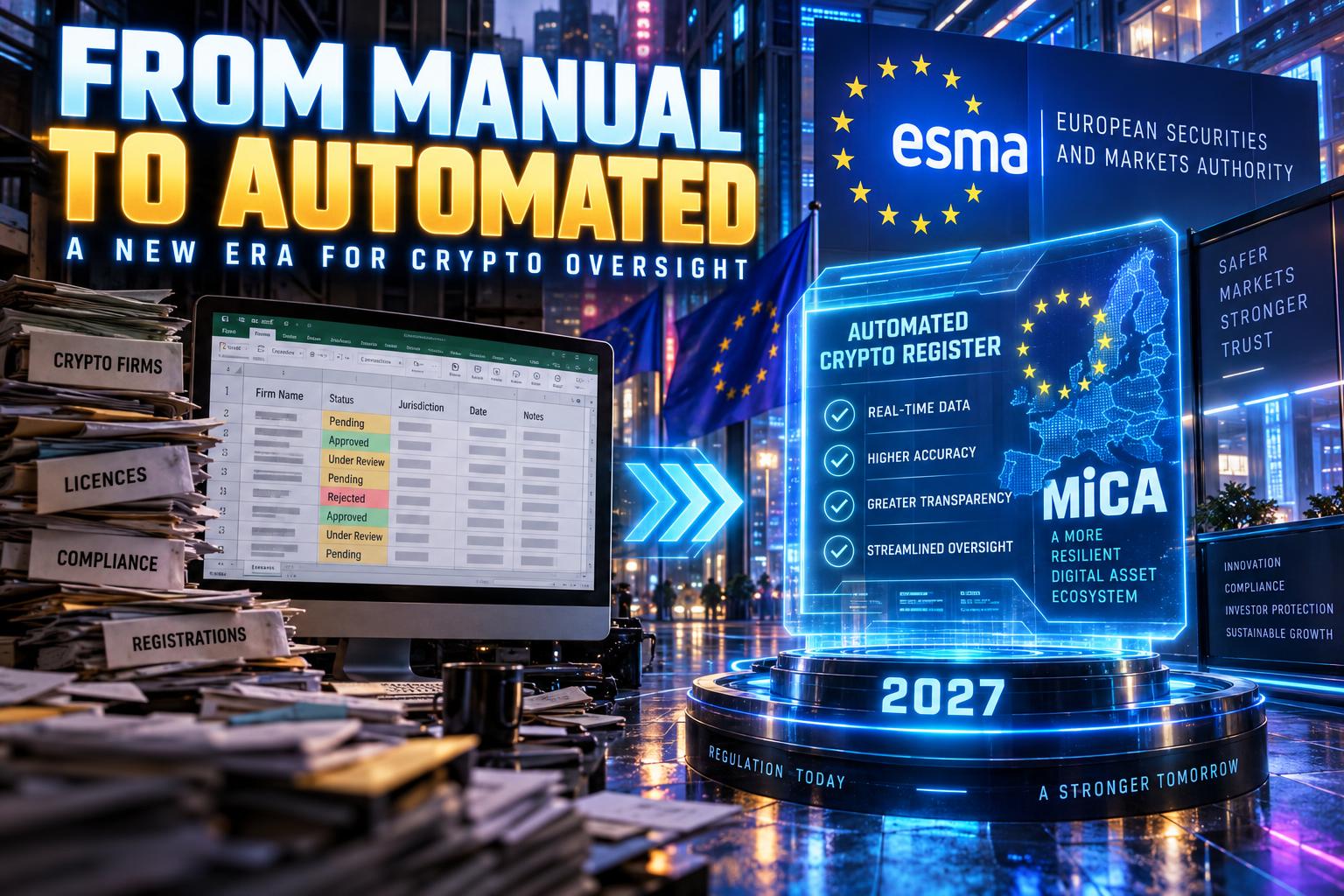

The European Securities and Markets Authority plans to overhaul its public crypto register in 2027, replacing a manual spreadsheet system with a web platform that automates data checks and tracks white paper revisions.
Nearly two years after launching its interim database in December 2024, the European Union’s securities regulator is preparing an upgrade to modernize how authorization records under the Markets in Crypto-Assets Regulation (MiCA) are collected and published. The existing register consists of downloadable spreadsheet files compiled from data submitted by national regulators.
That public record took on added weight after MiCA’s transitional period expired in July. Following that cutoff, crypto service providers lacking authorization had to shut down their EU businesses or risk enforcement measures, including multimillion-euro penalties. For investors, compliance teams, and counterparties, ESMA’s database provides a public reference for verifying a company’s authorization status in the bloc.
Moving beyond email submissions and spreadsheets
Under the current setup, national regulators send updates manually, requiring ESMA to consolidate those files by hand. The planned platform changes that workflow at the intake level.
“The new IT system will replace the current manual email-based submission and consolidation process with a structured web-based interface through which national competent authorities can provide and update information for their relevant entities/white papers,” ESMA said.
Access for external users will also expand beyond static files. Market participants will be able to export records in CSV format or pull information programmatically through application programming interfaces (APIs). ESMA noted that it could not yet disclose the full set of features planned for the rollout.
Automated white paper checks and GLEIF verification
Alongside changes to data entry and access, the new platform introduces automated validation tools. It will cross-check submitted entity records against external reference systems, including the Global Legal Entity Identifier Foundation (GLEIF) registry, an international directory of corporate identifiers.
Crypto white papers, which outline key details about digital assets, their issuers, and associated risks, will undergo similar scrutiny. The system will run technical checks against ESMA’s standardized reporting framework to catch documents that violate formatting rules or omit required disclosures.
The register will also store a revision history for each white paper, keeping a permanent log of document updates over time.